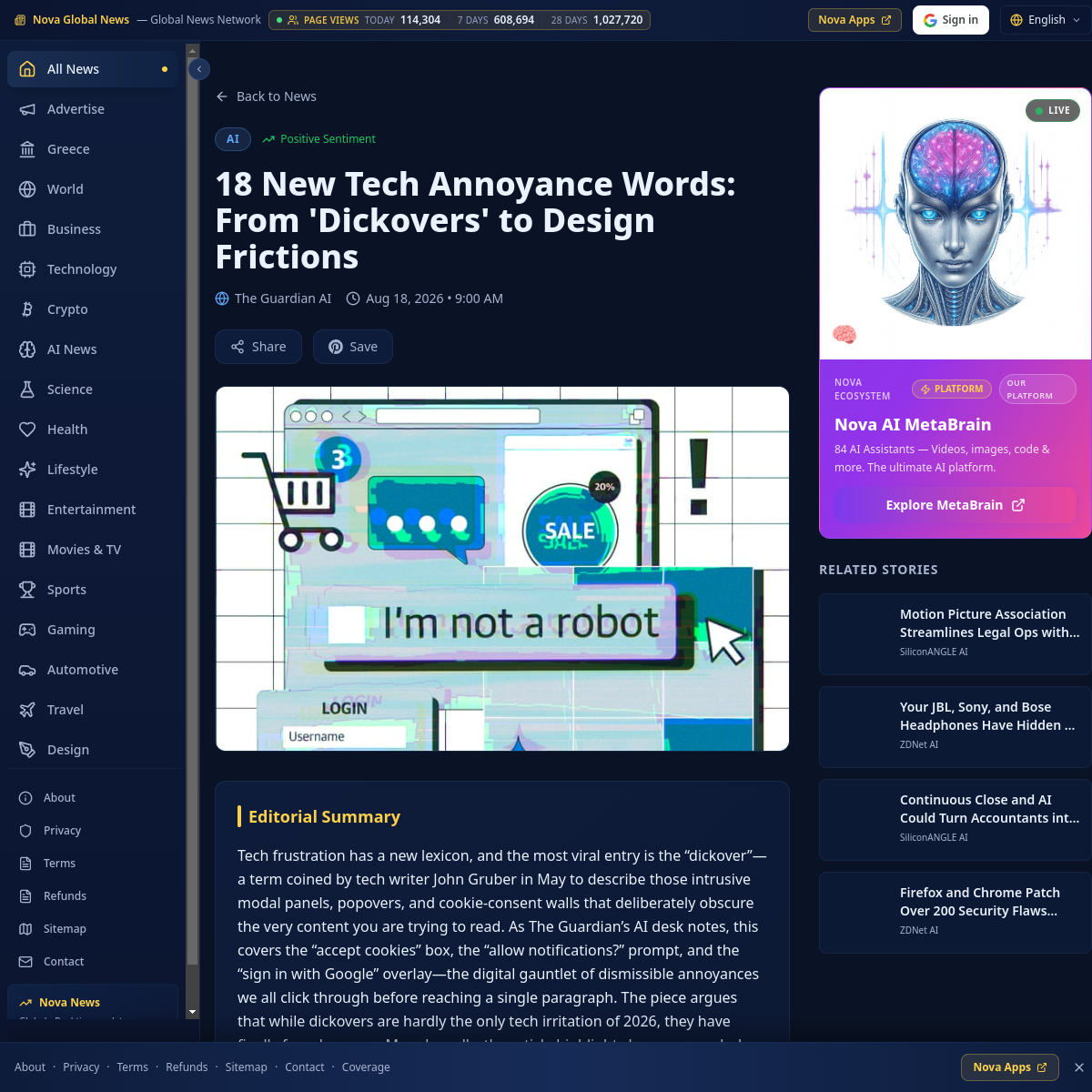
A growing list of digital irritations has found its voice in 2026, with the term “dickover” leading the charge. Coined by tech writer John Gruber, it refers to intrusive interface elements like cookie consent pop-ups, notification prompts, and sign-in overlays that block access to content. These persistent interruptions, once accepted as routine, are now being named and scrutinized. The Guardian’s AI desk highlights how such friction points—often dismissed as minor—are collectively undermining user experience. By giving them a label, users gain a shared language to express frustration and demand change.
The article underscores a broader cultural shift: naming these annoyances marks the beginning of resistance. What were once invisible hurdles in digital interaction are now part of a codified lexicon that empowers users to critique poor design. From “dickovers” to other emerging terms, this evolving vocabulary reflects a rising awareness of digital friction. It signals that users are no longer passively enduring bad UX but are actively identifying, discussing, and challenging it. This linguistic evolution is more than just humor—it’s a step toward better, more respectful digital experiences.