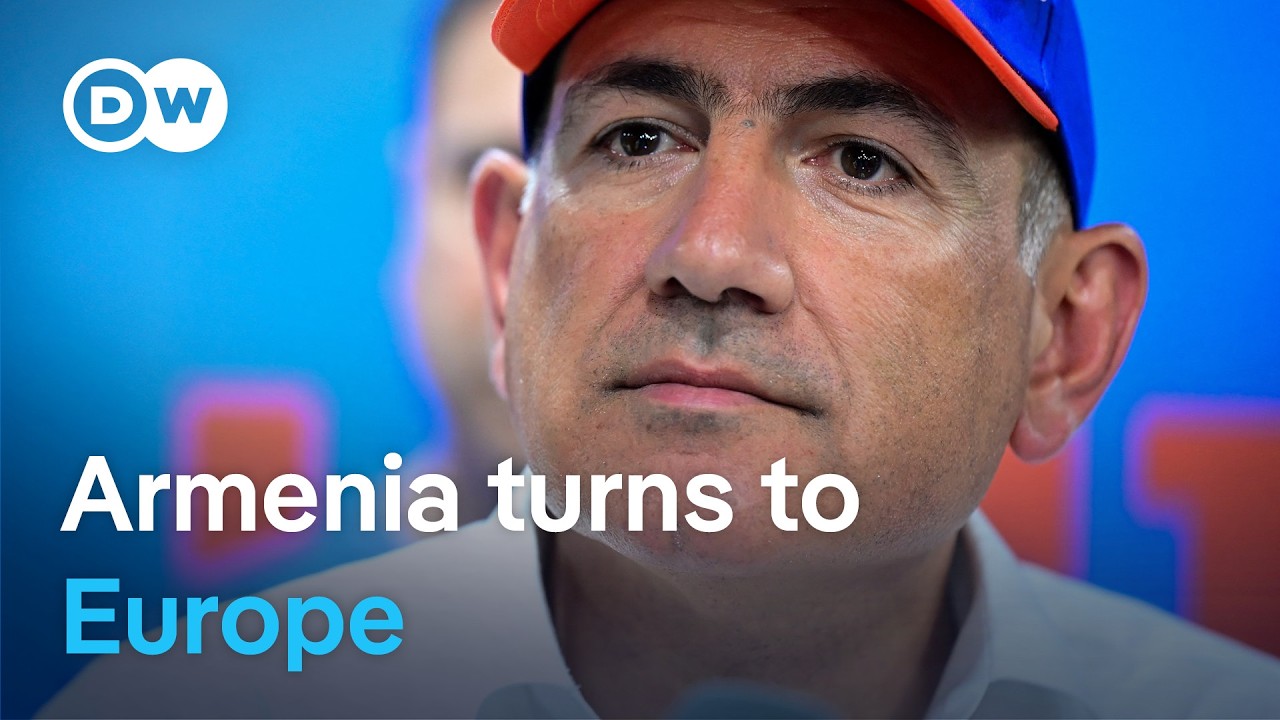
Armenian voters have re-elected Prime Minister Nikol Pashinyan, signaling a decisive move toward European integration despite the loss of Nagorno-Karabakh and ongoing pressure from Moscow. The election outcome reflects a growing public preference for closer ties with Western institutions and a strategic distancing from traditional Russian influence. This shift marks a pivotal moment in Armenia’s foreign policy direction, emphasizing sovereignty and long-term alignment with European values and frameworks.
Foreign policy expert Stefan Meister analyzes the implications of this development in a discussion with DW News. He examines the hurdles Armenia must overcome to advance its European aspirations, including regional instability and economic challenges. The conversation also considers how Russia may react to Armenia's changing orientation, particularly in the context of shifting dynamics across the Caucasus.