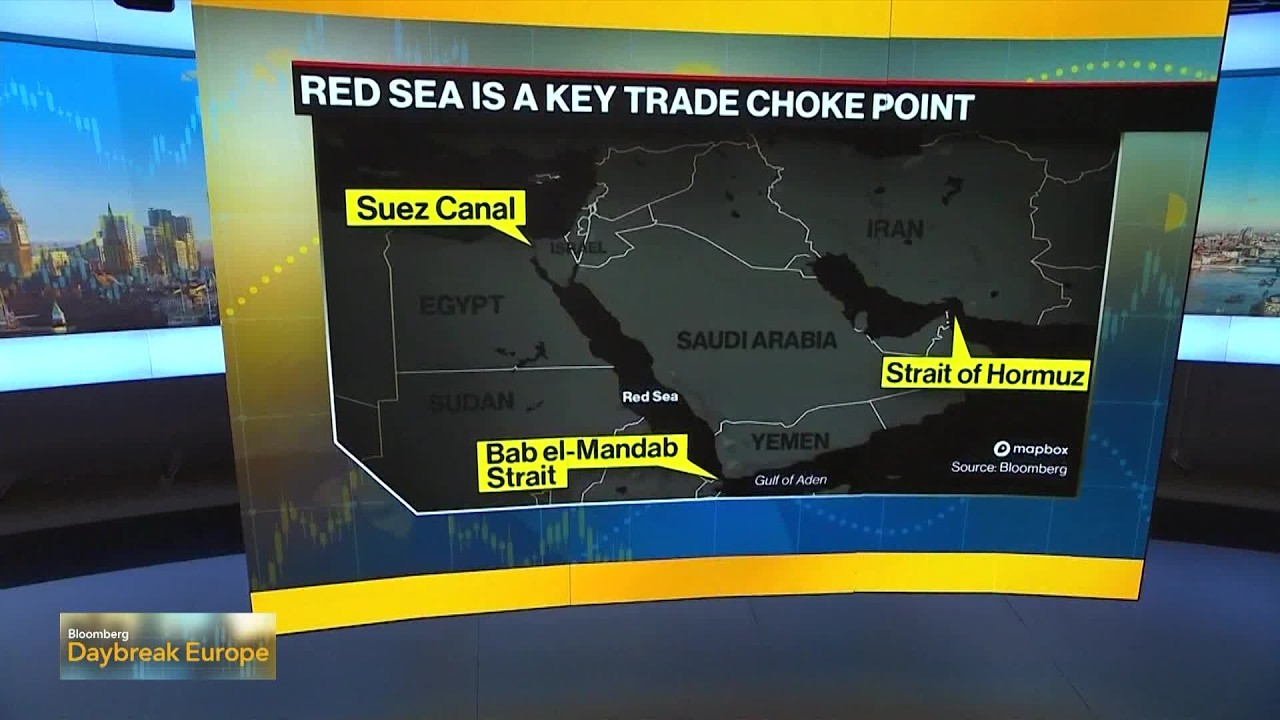
Yemen’s Houthi movement has declared responsibility for drone and missile attacks on two oil tankers in the Red Sea, intensifying a campaign that has significantly disrupted maritime traffic and contributed to rising global oil prices. The strikes are tied to the broader conflict stemming from the war in Gaza, with the Houthis framing their actions as support for Palestinian causes. In response, U.S. Central Command launched its 12th consecutive night of airstrikes targeting Iran-linked sites, aiming to reduce threats to commercial shipping. The United States warned of additional measures if such attacks continue.
The situation has drawn attention from financial markets, with analysts noting that prolonged Red Sea disruptions could push crude oil prices above $100 per barrel. Bloomberg reporter Paul Wallace highlights the strategic importance of the Red Sea as a key global shipping lane, particularly for energy exports. Shipping firms are increasingly rerouting vessels around Africa, leading to higher costs and longer delivery times. The report explores regional tensions, Iran’s influence, and the limited prospects for diplomatic resolution amid escalating military activity.