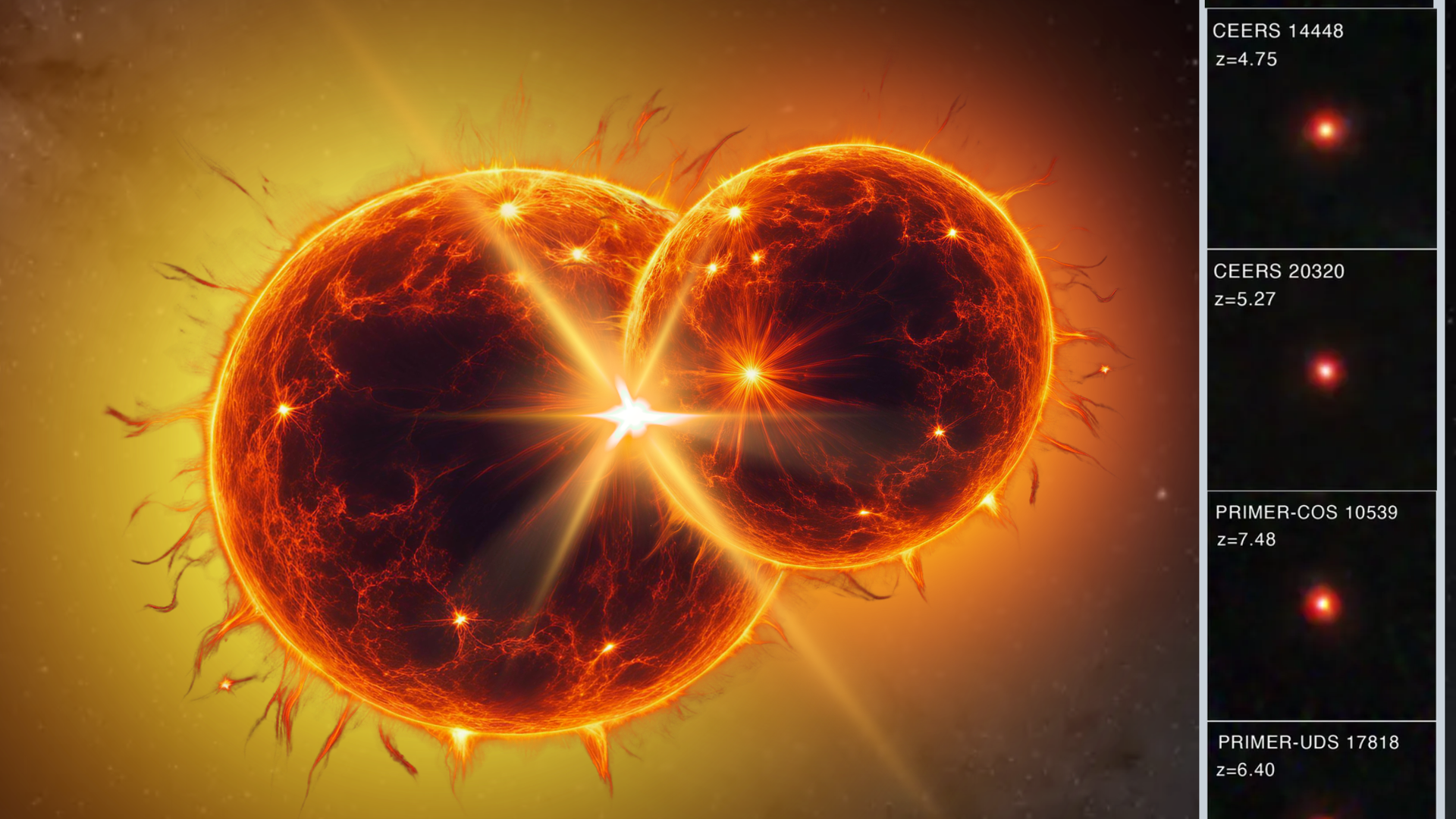
Content overview: “How Ancient Star Collisions Explain Mysterious Little Red Dots and Supermassive Black Hole”. New research suggests that collisions between stars in the early universe may have been surprisingly common, potentially solving two major cosmic mysteries: the rapid growth of supermassive black holes and the nature of the enigmatic 'Little Red Dots' spotted by the James Webb Space Telescope (JWST) New research suggests that collisions between stars in the early universe may have been surprisingly common, potentially solving two major cosmic mysteries: the rapid growth of supermassive black holes and the nature of the enigmatic 'Little Red Dots' spotted by the James Webb Space Telescope (JWST).
These frequent stellar smash-ups could have provided the dense material needed to form massive black hole seeds, which then grew into the behemoths we observe at the centers of galaxies. For the complete material, the listing points back to the source inside the network.