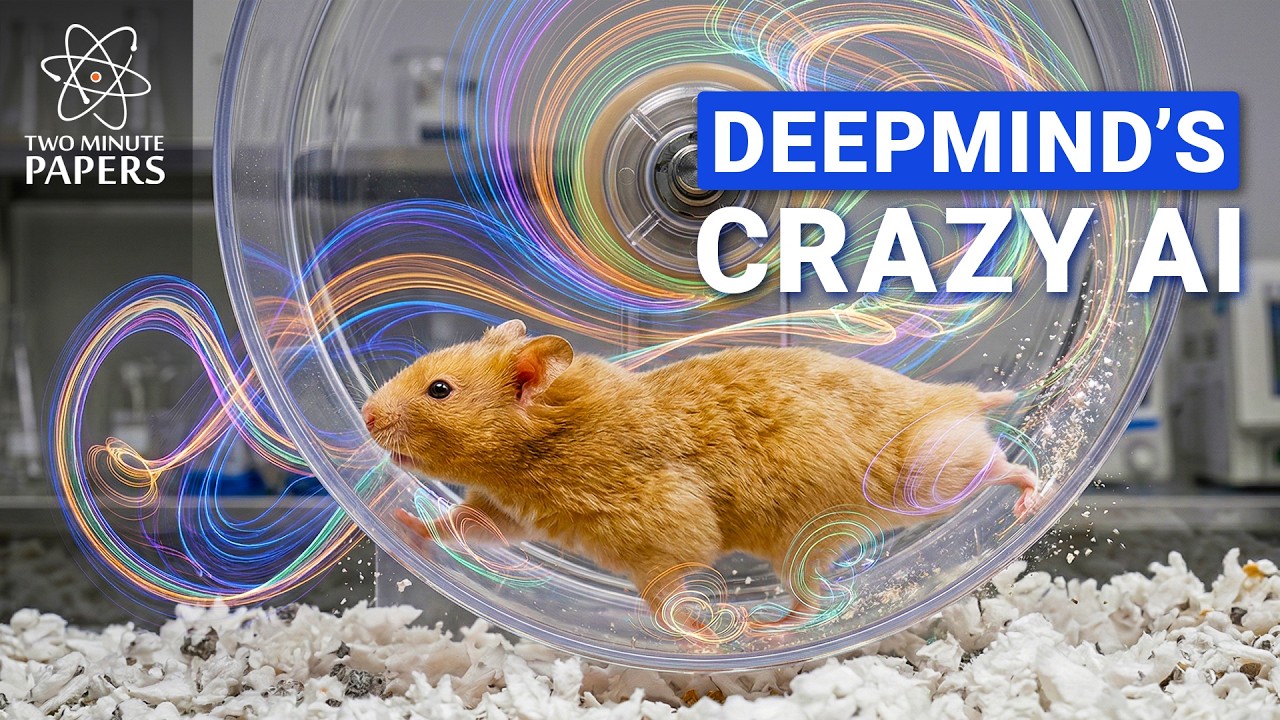
DeepMind’s latest AI model demonstrates an advanced ability to infer unseen visual details by leveraging learned patterns from existing data. Instead of relying solely on direct observation, the system uses probabilistic reasoning to predict structural and material properties in environments it has never encountered. This breakthrough stems from a novel approach that combines geometric modeling with statistical learning, enabling the AI to generate realistic representations of complex scenes based on partial inputs.
The technology is grounded in Gaussian-based synthesis techniques, which allow for efficient representation of 3D shapes and textures. By analyzing vast datasets of physical materials and spatial configurations, the AI builds internal models that simulate how objects might appear under different conditions. While not designed for real-time rendering, this method opens new possibilities for applications in virtual design, scientific simulation, and robotics, where anticipating unseen elements can improve decision-making and planning.