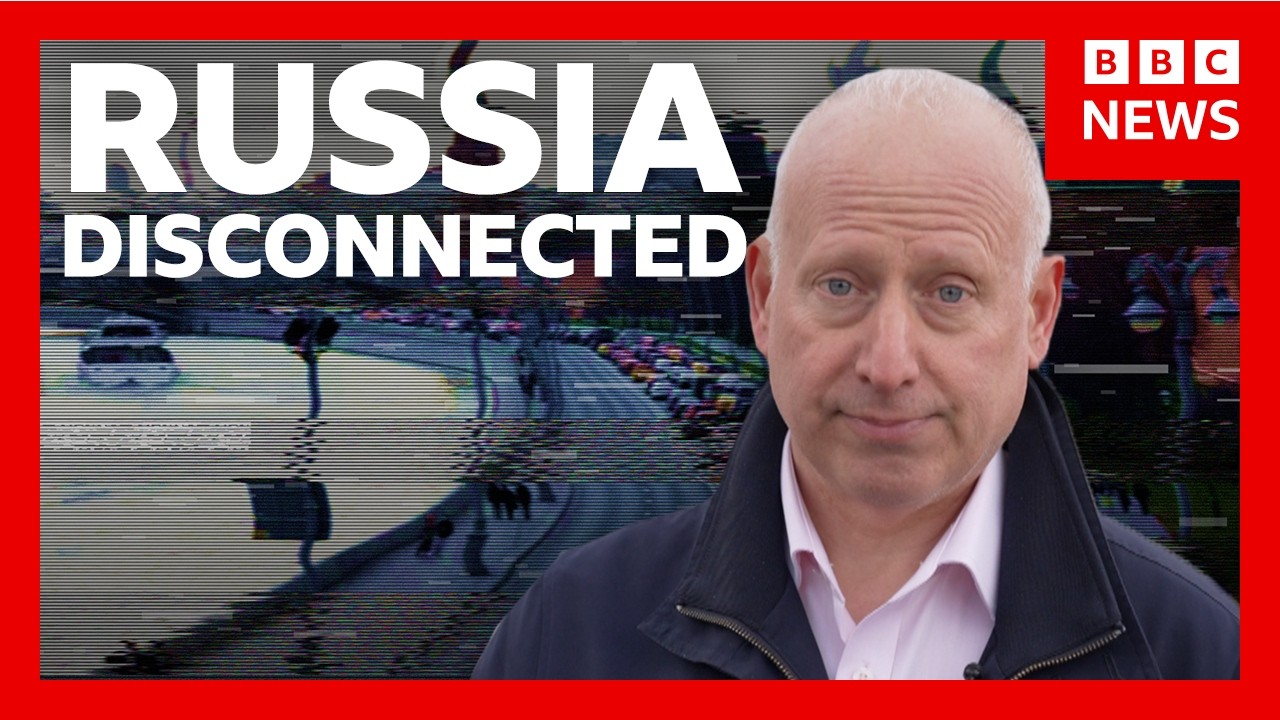
In modern Russia under President Putin, the government has intensified control over public expression and digital spaces. Authorities have imposed strict limits on protests and heavily regulate internet access, shaping how citizens receive information and communicate. These measures include blocking international messaging platforms, disrupting online services, and occasionally shutting down mobile networks entirely. While officials claim these actions are necessary for national security, independent observers see them as tools to limit free speech and isolate the population from global discourse.
The broader goal is to establish a "sovereign internet" — a self-contained digital environment where state authorities can monitor and restrict online activity. This system enables the government to disconnect domestic networks from global infrastructure during emergencies or political unrest, reinforcing centralized control. As reported by BBC’s Steve Rosenberg, this strategy supports a vision of a digitally isolated Russia, where information flows are tightly managed. The result is a networked space increasingly shaped by censorship and surveillance, with limited access to external perspectives.