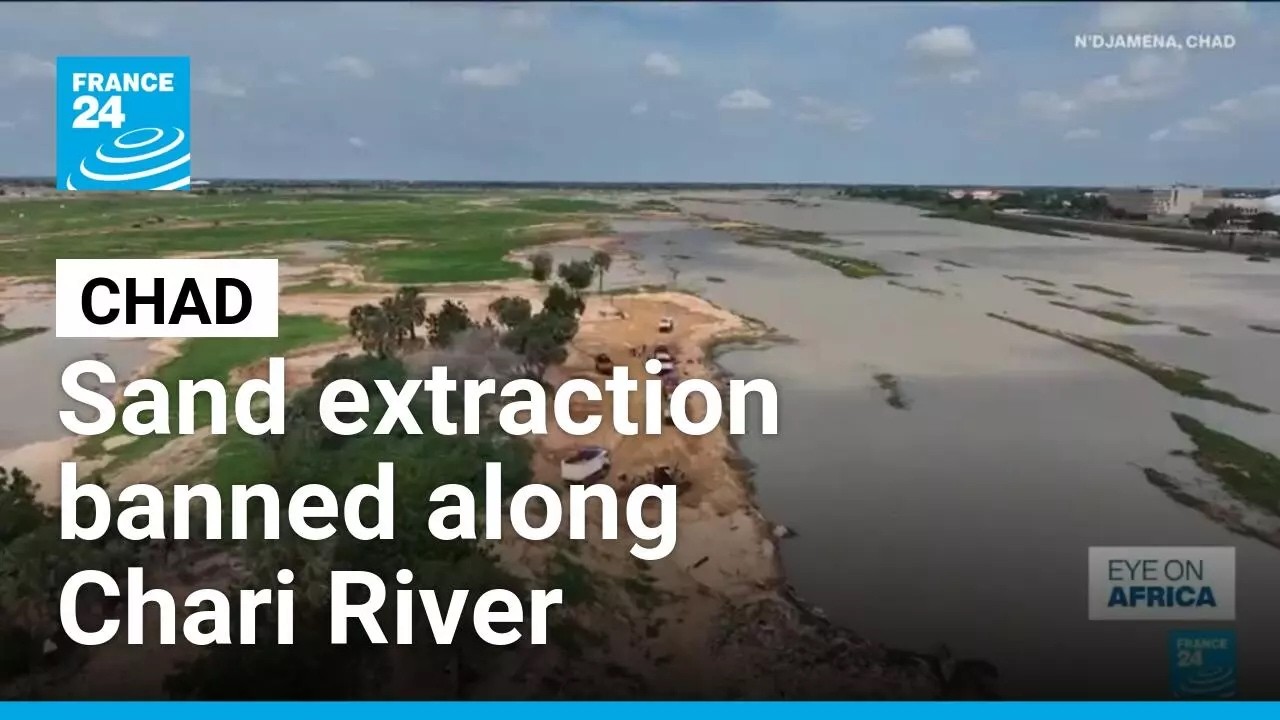
The Chari River in Chad, essential to the capital N'Djamena, faces severe environmental strain due to prolonged sand mining. The Ministry of Mines has imposed a ban to safeguard the river’s ecosystem, wildlife, and long-term water resources. This move responds to growing concerns over erosion, pollution, and habitat loss caused by unregulated extraction. However, the decision has ignited public debate, as thousands of individuals depend on sand mining for daily income, particularly in informal sectors. With no immediate replacement livelihoods available, the ban risks deepening poverty and social instability.
Environmental advocates support the restriction as necessary for ecological preservation, emphasizing the river's role in supporting drinking water, agriculture, and fishing. Yet, policymakers must address the economic impact on affected communities. The situation reflects a wider challenge in developing nations: balancing environmental protection with sustainable development and human welfare. Without comprehensive support programs, the policy may fail to achieve its goals. The outcome will shape both the future of the Chari River and the resilience of local populations.