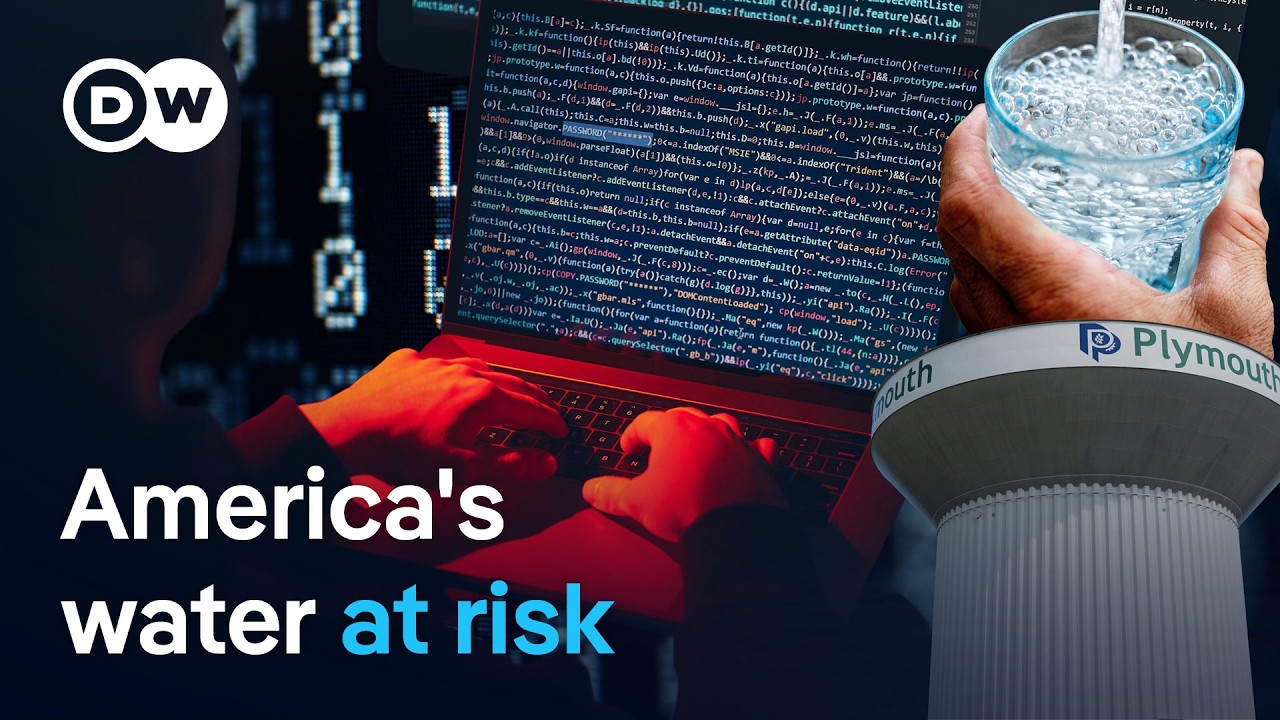
Dozens of water treatment facilities across the United States have experienced cyber intrusions since early summer, with U.S. officials attributing the attacks to Iran. These incidents have heightened concerns about the security of critical infrastructure, as the nation’s water systems serve millions daily. With around 152,000 public drinking water providers and over 16,000 wastewater treatment plants, many of these facilities operate on outdated technology and lack adequate cybersecurity protections. Experts highlight a growing gap in resources and expertise needed to defend against advanced digital threats, especially those backed by foreign governments.
The federal government has responded with alerts and collaboration efforts aimed at strengthening defenses at local levels. This DW News report examines the scale of the threat, potential outcomes if systems are compromised, and current initiatives to secure water networks. As cyberattacks become more frequent and complex, ensuring the safety of essential services like clean water remains a top priority. The investigation underscores the importance of proactive measures and coordinated action to protect vital infrastructure from future breaches.