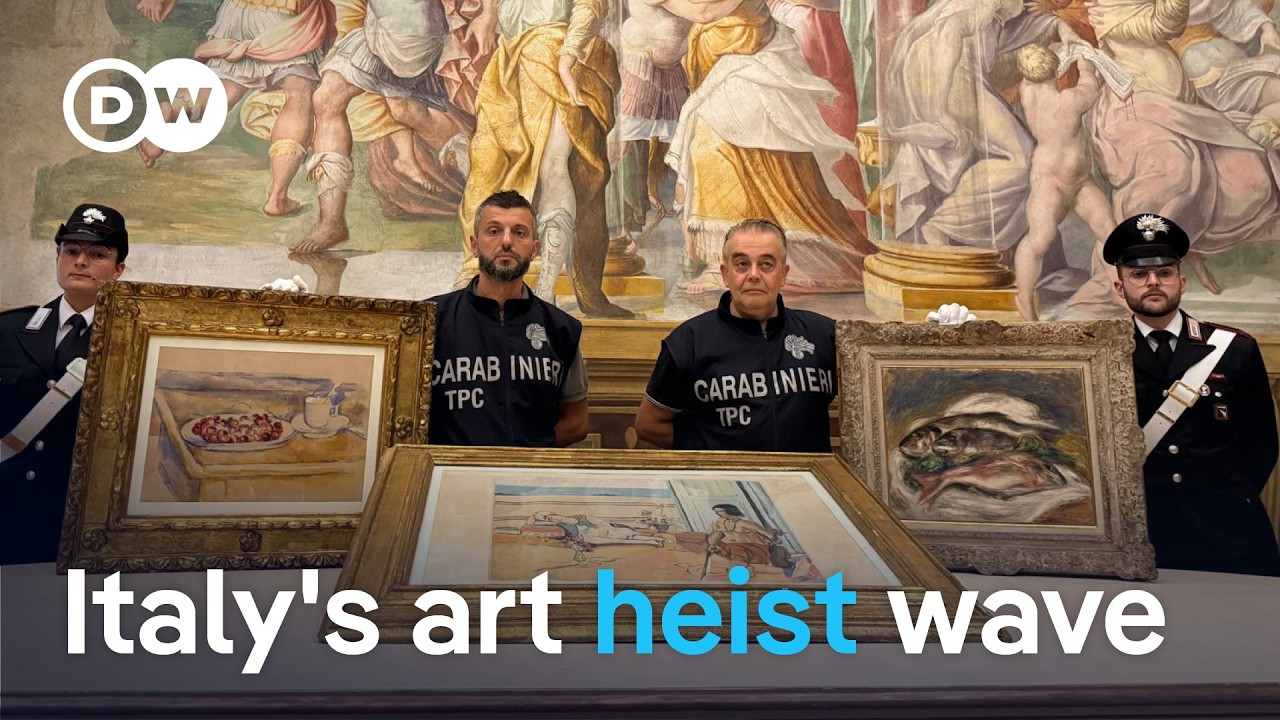
Recent art thefts in Italy have drawn attention to the continued vulnerability of masterpieces despite heightened awareness. Two significant break-ins—one in Messina, Sicily, and another near Parma—have resulted in the loss of several Renaissance works, with some recovered but others still missing. The stolen pieces, highly valuable and widely recognized, are not easily sold on legitimate markets, making them difficult to liquidate through traditional channels. Instead, they are often used as leverage in criminal networks, serving as collateral or ransom items in illicit deals.
Dutch investigator Arthur Brand highlights how these artworks function as underground currency within organized crime. Their value lies not in resale but in their ability to facilitate high-stakes transactions between criminals. The recovery of the Parma paintings demonstrates that some artworks can be retrieved, but the absence of the Messina pieces underscores the challenges of tracking and recovering stolen art. Experts emphasize the need for improved security systems, including digital monitoring and international collaboration, to better protect cultural heritage and disrupt the black market trade.