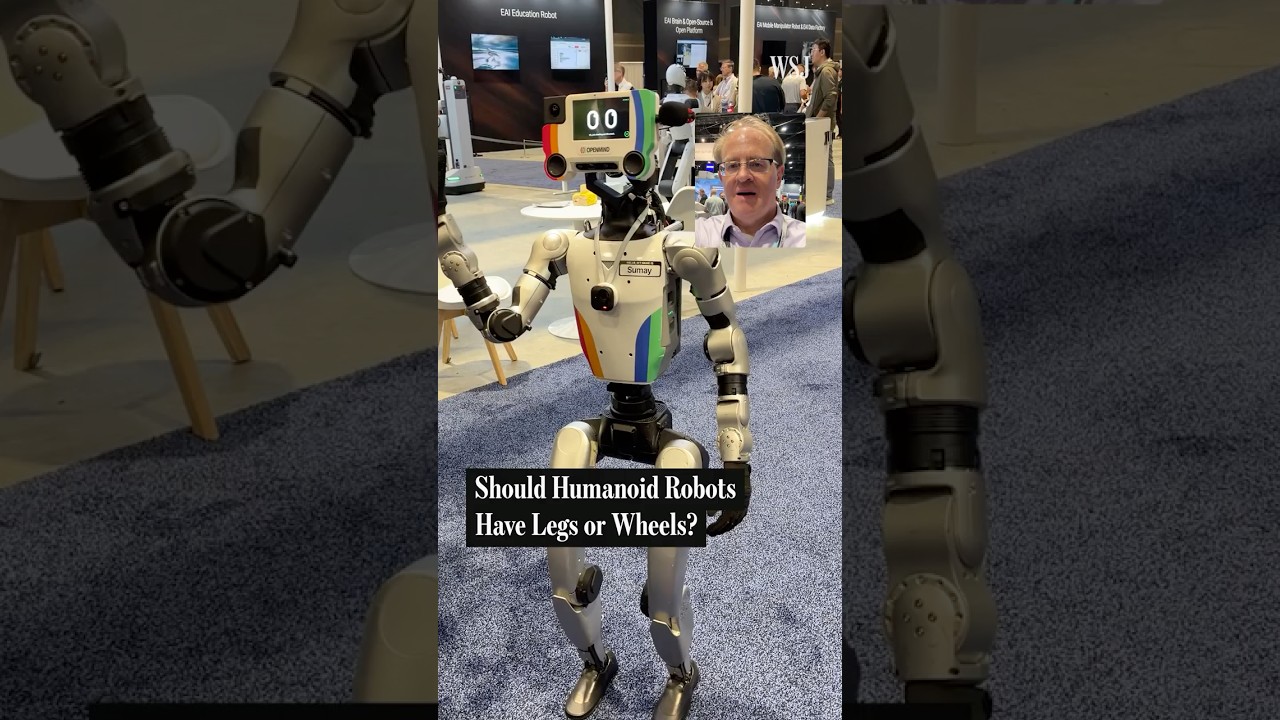
The debate over whether humanoid robots should walk on legs or roll on wheels is heating up at major tech events like the Automate robotics show in Chicago. Engineers and manufacturers are testing competing designs, each claiming advantages in stability, energy efficiency, and adaptability. Legged robots offer greater flexibility in uneven terrain and complex environments, while wheeled models provide smoother motion and lower power consumption. Experts highlight that the choice depends heavily on intended use—warehouse logistics may favor wheels for speed and precision, while home assistance or outdoor exploration could benefit from legged mobility.
As these prototypes evolve, their design impacts broader applications across industries. The decision between legs and wheels isn’t just mechanical—it shapes how robots interact with human spaces. Manufacturers must balance agility, cost, and reliability when selecting a locomotion method. This ongoing innovation reflects a larger shift toward more autonomous and integrated robotic systems. Ultimately, the path forward may not be one solution but a range of specialized machines tailored to specific tasks, driven by real-world performance rather than theoretical preference.