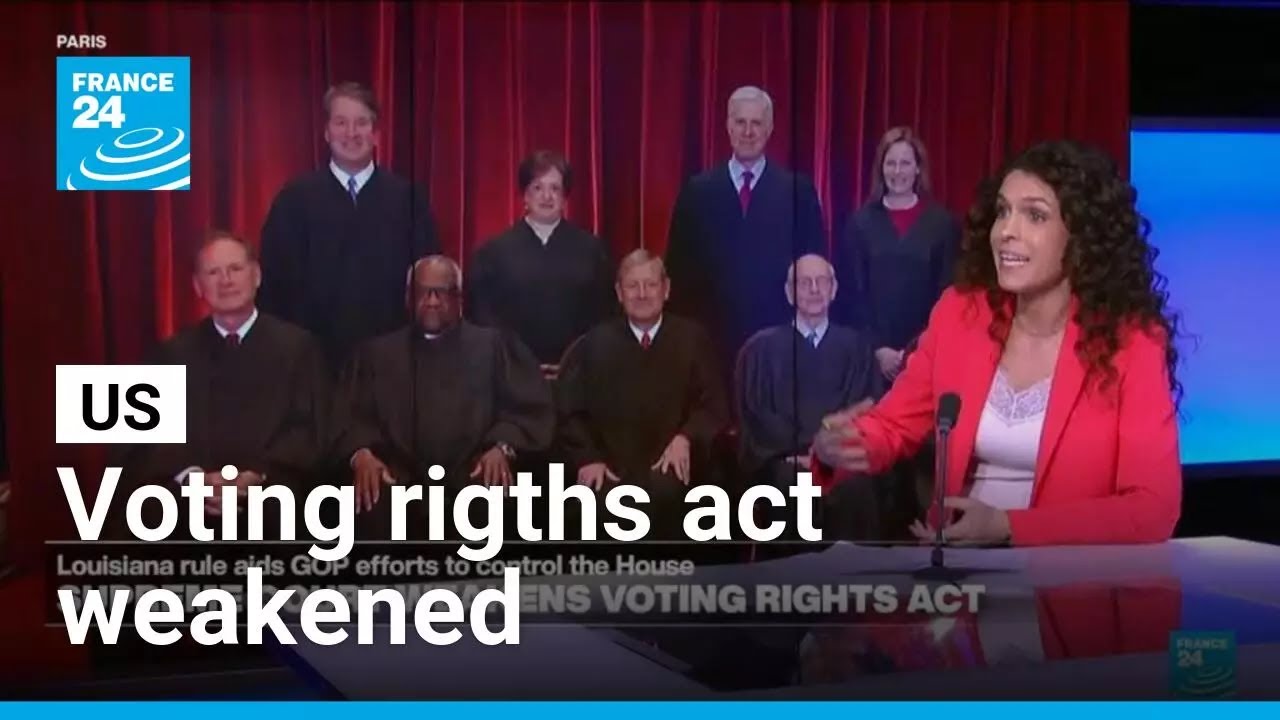
The U.S. Supreme Court has delivered a pivotal 6-3 ruling that diminishes the effectiveness of the Voting Rights Act of 1965. The decision invalidated a congressional district in Louisiana that had a majority-Black population, citing that its creation relied excessively on racial considerations. This outcome marks a significant shift in how electoral districts are evaluated under federal civil rights law, setting a stricter standard for race-based redistricting.
The ruling has sparked widespread concern among voting rights advocates, who warn it may undermine minority representation and make it harder to contest discriminatory voting maps. With this decision, the court has effectively narrowed the scope of protections meant to safeguard equitable political participation. The impact is expected to influence future redistricting efforts nationwide, potentially altering the balance of power in elections where minority communities have historically held influence.