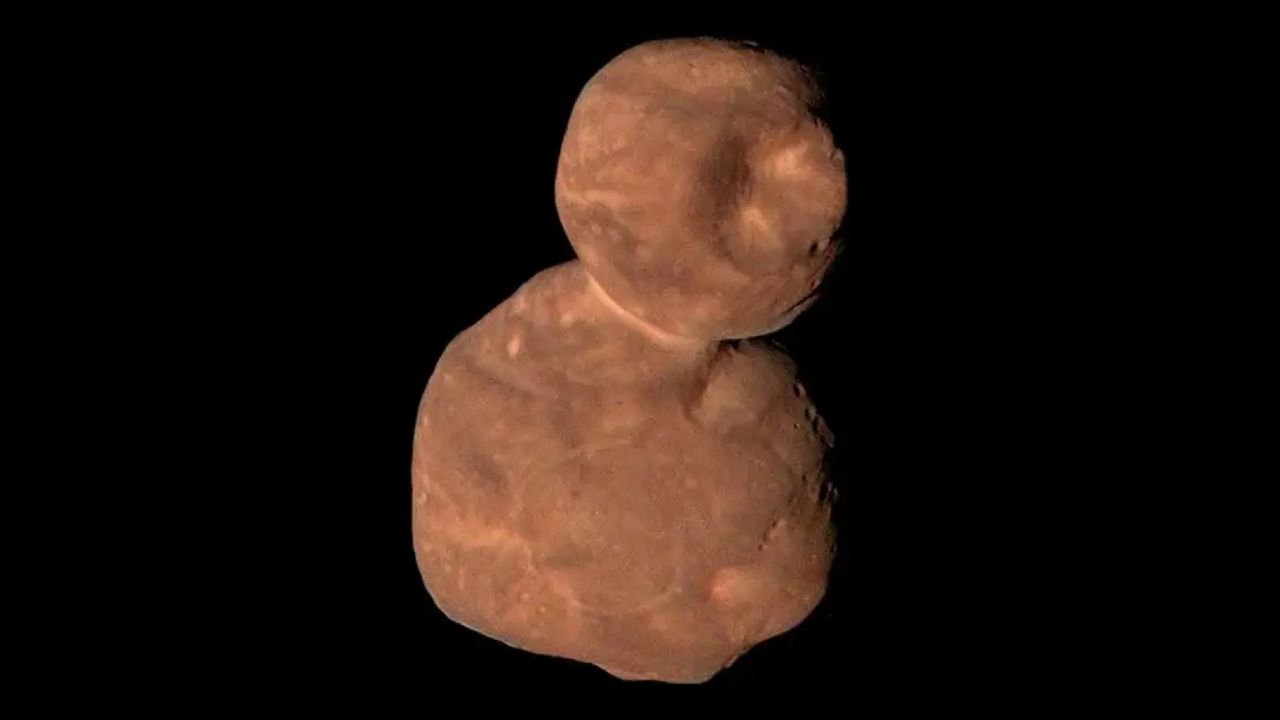
Icy bodies in the outer solar system often resemble snowmen, with two distinct lobes connected by a narrow neck. A recent study suggests these formations result from gentle collisions between icy fragments, where low-speed impacts allow objects to stick together without breaking apart. This process, known as gravitational accretion, can naturally produce the elongated, dual-lobed shapes seen in many trans-Neptunian objects.
The research highlights that such structures are more common than previously thought, particularly in regions beyond Neptune where conditions favor slow-moving, icy particles. The findings help explain why these peculiar shapes appear repeatedly across the solar system. Scientists believe this mechanism could be a key part of planetary formation, offering insight into how small bodies evolve into larger ones over time.